How Technology Is Changing Remote Work: Modern Trends
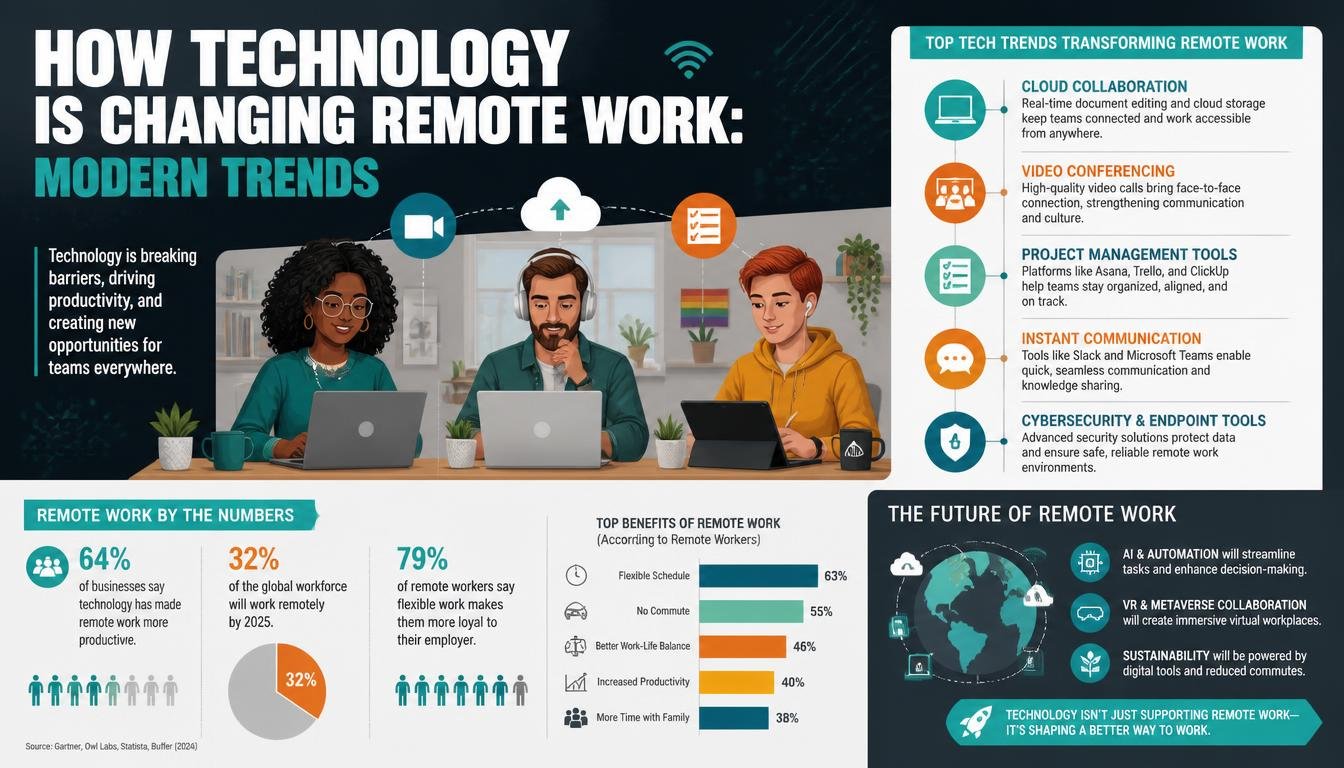
The way we define the office has shifted permanently, and understanding how technology is changing remote work reveals a landscape defined by flexibility, digital infrastructure, and global connectivity. Professionals are no longer tethered to a physical desk, as high-speed internet and cloud computing have dismantled the traditional barriers to productivity.
By examining the tools and strategies driving this transition, you will gain a clearer picture of how modern teams sustain momentum without sharing a physical zip code. This evolution is not merely a temporary adjustment; it is a fundamental restructuring of the professional experience that impacts everything from recruitment to long-term career growth.
The Core Drivers of Distributed Operations
The primary shift in how technology is changing remote work centers on the transition from localized servers to cloud-based ecosystems. Previously, accessing proprietary data required a secure connection to an on-site network, often facilitated by cumbersome VPNs that frequently crashed.
Today, platforms like Google Workspace and Microsoft 365 allow teams to collaborate on documents in real-time regardless of their geographic location. This transition removes the bottleneck of document versioning, where multiple copies of a file would circulate via email, leading to confusion and lost progress.
Cloud infrastructure provides more than just file storage; it offers an elastic environment where computing power scales with project demands. Startups and established enterprises alike now leverage Software as a Service (SaaS) models to deploy complex applications instantly.
This democratization of high-end software ensures that an independent consultant in a home office has access to the same analytical power as a multinational firm. By shifting the burden of hardware maintenance to service providers, companies reduce their overhead while increasing their operational agility.
The Evolution of Communication Tools
Communication is the heartbeat of any organization, and the tech landscape has evolved to mimic the serendipity of in-office interactions. Async communication, such as Slack or Microsoft Teams, has largely replaced the constant stream of meetings that characterized the early 2000s.
These platforms allow individuals to contribute when they are most productive rather than being forced into a rigid, synchronous schedule. This adjustment honors the diverse time zones of a global workforce, ensuring that input is gathered without disrupting deep work sessions.
Video conferencing has also matured from glitchy, low-resolution calls to high-fidelity virtual meeting rooms. Features like noise cancellation, background blurring, and automatic transcriptions allow professionals to maintain a professional appearance from any environment.
These advancements reduce the cognitive load associated with virtual meetings, allowing participants to focus on the agenda rather than troubleshooting audio or visual technicalities. The integration of screen-sharing and interactive whiteboards further bridges the gap, facilitating the brainstorming sessions that were once thought to be impossible outside of a conference room.
Data Security in a Decentralized World
As the perimeter of the corporate office dissolves, the responsibility for data security has shifted toward individual devices and endpoint management. Protecting sensitive information is a top priority for companies moving to a remote-first model, as the risk of unauthorized access grows with every new connection point.
Zero Trust architecture has emerged as the standard, operating on the assumption that no user or device is inherently trustworthy. This approach requires constant verification, ensuring that access to internal data is granted based on identity and context rather than network location.
Encryption and multi-factor authentication (MFA) serve as the bedrock of this new security framework. By requiring additional proof of identity, such as biometric markers or time-sensitive tokens, organizations can neutralize the threat posed by stolen login credentials.
Endpoint detection and response (EDR) tools provide IT departments with visibility into the health of remote machines, allowing them to patch vulnerabilities before they are exploited. This proactive stance on security is vital for maintaining client trust and regulatory compliance in an increasingly digital economy.
The Impact of Automation on Productivity
Automation is arguably the most significant factor in how technology is changing remote work, as it removes repetitive, manual tasks from the daily workflow. Tools like Zapier or Make allow employees to build automated pipelines between disparate applications, ensuring that data flows correctly without human intervention.
For example, a lead generated in a web form can be automatically logged in a CRM, assigned to a sales representative, and added to a follow-up email sequence. This creates a friction-free environment where professionals spend less time on administration and more time on creative problem-solving.
Artificial Intelligence (AI) is now augmenting these capabilities by providing predictive insights and content generation assistance. AI-driven project management tools can analyze team velocity and flag potential bottlenecks before they impact a deadline.
When integrated into the workflow, these systems act as a force multiplier for small teams, allowing them to punch above their weight class. By outsourcing the mundane to intelligent algorithms, remote employees can cultivate a more meaningful connection to their core responsibilities.
Comparing Traditional vs. Modern Infrastructure
The shift in professional environments is best understood by looking at the stark differences between legacy systems and modern, cloud-native setups. The following table highlights how specific areas of operations have changed to support the current remote-centric reality.
| Category | Traditional Office Tech | Modern Remote Tech |
|---|---|---|
| Data Storage | Local physical servers | Encrypted cloud storage |
| Communication | Internal email and phone | Async chat and video tools |
| Document Access | VPN-dependent intranet | Identity-based web access |
| Security Model | Castle-and-moat perimeter | Zero Trust verification |
This comparison illustrates that the transition is not just about moving hardware; it is about changing the philosophy of access. By moving away from a perimeter-based security model, companies have enabled a more fluid, responsive, and secure work environment. Professionals who master these modern tools are better positioned to succeed in a competitive, distributed job market.
Key Tools Shaping the Future
A specific set of technologies has become essential for distributed teams to remain aligned and productive. These tools vary by industry, but they generally fall into three categories: collaboration, organization, and wellness.
- Cloud Suites: Google Workspace and Microsoft 365 provide the foundational documents, spreadsheets, and email services required for daily operations.
- Project Management: Platforms like Asana, Monday.com, and Jira allow teams to visualize progress and assign ownership to tasks in real-time.
- Communication Platforms: Slack and Discord facilitate the informal chat that builds team culture and allows for quick, non-urgent queries.
- Virtual Collaboration: Miro and Mural serve as digital whiteboards, enabling teams to map out ideas and conduct workshops in a virtual space.
These tools represent a shift toward transparency in the workplace. When a project is managed in a public, digital space, everyone can see the status of tasks, which reduces the need for status meetings.
This transparency builds trust, as it removes the perception that work is invisible or unmeasured. The National Institute of Standards and Technology provides further guidance on managing the risks associated with these digital ecosystems, ensuring that as we adopt new tools, we do not sacrifice our fundamental security standards.
Overcoming Challenges in a Virtual Space
While the benefits are clear, the digital-first approach introduces unique challenges, particularly regarding burnout and social isolation. Without the natural boundaries provided by a commute or a physical office, some professionals find it difficult to disconnect at the end of the day.
This “always-on” culture can lead to exhaustion, which ultimately degrades the quality of work. Organizations that successfully navigate this change implement policies that encourage disconnecting, such as “no-meeting Fridays” or expectations around response times outside of core hours.
Social connection is another hurdle that requires intentional effort to overcome. Spontaneous water-cooler moments are rare in a purely digital environment, necessitating structured virtual social events or dedicated non-work channels.
Leaders must be proactive in fostering a sense of belonging, ensuring that employees feel like part of a team rather than isolated nodes in a network. By normalizing the human element of remote work, companies can retain top talent while maintaining high performance.
Frequently Asked Questions
How can I stay productive while working from home?
Productivity in a remote setting relies on creating a dedicated space and maintaining a consistent routine. Using time-blocking techniques and project management software helps keep your daily goals clear, while clear communication with your team sets expectations for availability.
Is remote work less secure than working in an office?
Remote work is not inherently less secure, but it does shift the risk profile. As long as employees use secure, company-approved devices, multi-factor authentication, and encrypted connections, the risks can be effectively managed.
What role does AI play in the future of remote work?
AI will continue to automate manual workflows, analyze team performance data, and provide personalized coaching for remote employees. It acts as a bridge that keeps teams aligned and reduces the administrative burden of managing distributed projects.
How do I combat the feeling of isolation?
Combatting isolation requires making intentional social connections, such as scheduling virtual coffee chats or participating in team-building activities. It is also important to maintain a healthy work-life balance by stepping away from the screen to engage with your local community.
Will remote work remain the standard for most companies?
Many organizations have adopted a hybrid or remote-first model because it allows them to recruit global talent and reduce real estate costs. While some roles will always require physical presence, the technological infrastructure is now firmly in place to support a permanent shift toward flexibility.
Future Outlook for Distributed Careers
The trajectory of how technology is changing remote work points toward even greater integration of immersive experiences and intelligent automation. We are likely to see virtual reality and augmented reality tools play a larger role in collaborative spaces, making remote meetings feel more like face-to-face interactions.
These advancements will continue to lower the friction of working from anywhere, allowing professionals to focus entirely on their contributions rather than the logistics of their environment. As these technologies mature, the distinction between “remote” and “office” work will continue to blur until it is no longer a relevant categorization.
Remaining adaptable is the most important skill for any professional in this era. Technology will continue to evolve, and those who embrace new tools while maintaining a healthy boundary between their digital and personal lives will thrive.
The future of work is not about where you sit, but how you leverage the tools at your disposal to deliver value. By staying informed and refining your digital workflows, you can ensure that you are ready for whatever changes come next in the landscape of remote work.